
Roof Coatings Denver
Denver Flat Roof Protection
Rated With 5 Star Google Reviews
Serving the Denver Metro Since 1978
Roof inspections for coating, repair, and replacement
Denver Roof Coating Service
Roof Coatings Denver, CO
Roof Coatings Denver, CO Flat Roof Protection
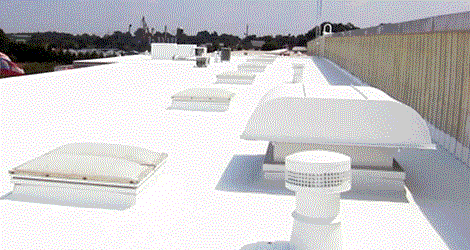
Denver flat roofs take a beating from sun, hail, snow, ponding water, freeze and thaw cycles, and plain old age. A roof coating can help protect the surface, slow wear, improve water shedding, and buy valuable service life when the roof is still a good candidate for coating.
Featured Answer: Roof coatings in Denver are used to protect low slope and flat roofing systems from UV exposure, water wear, cracking, and surface breakdown. The right coating can extend roof life, improve reflectivity, and reduce leak risk when installed over a properly inspected and prepared roof surface.
Why Roof Coatings Matter For Denver Properties
If this is your first time hearing this, a roof coating is not paint. Paint makes something look better. A professional roof coating is built to protect a roof surface. On low slope and flat roofs, the coating becomes a protective layer over the existing roof system after the surface is inspected, cleaned, repaired, and prepared correctly.
Denver is rough on roofing. The sun sits high and strong. Hail can bruise the surface. Snow melts during the day and freezes again at night. Water can sit around drains, seams, scuppers, roof edges, and old patch areas. That kind of movement is where many flat roof problems begin.
A coating is not the right answer for every roof. That is the honest truth. If the roof is saturated underneath, badly blistered, separating at seams, or soft under foot, coating over the problem is like putting a clean shirt over a broken rib. It may look better for a minute, but the problem is still there. A proper inspection comes first.
When the roof is a good candidate, coating can be a smart way to protect the building, reduce surface wear, and avoid jumping straight into a full replacement before it is needed.
Schedule A Roof Coating Inspection
A coating only works when the roof is ready for it. We look at seams, drains, roof edges, flashings, soft areas, old patches, ponding water, and surface condition before recommending the next step.
Get My Roof CheckedWhat Roof Coating Can Help Protect Against
Flat roofs do not fail all at once. They usually fail in stages. First the surface dries out. Then seams open. Then old patch areas start lifting. Then water finds low spots. Then the leak shows up inside, usually after the damage has already been working for a while.
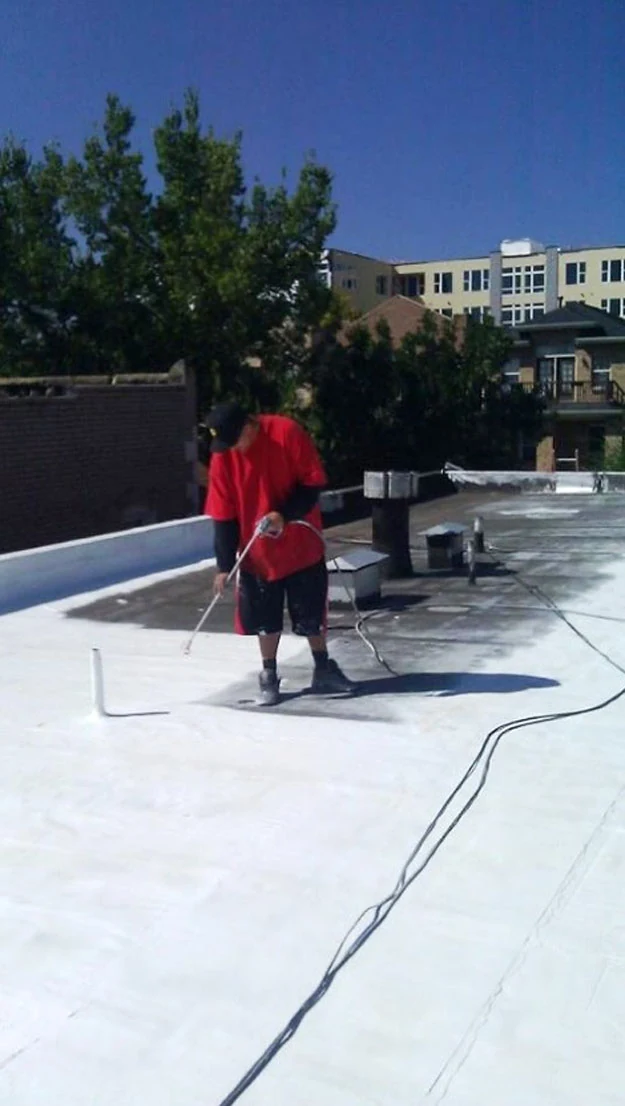
Roof coating helps create a protective barrier over the surface. Depending on the roof type and condition, coating may help reduce UV wear, seal small surface cracks, protect seams after proper repair, and improve the way the roof handles weather exposure.
- UV damage from strong Colorado sun
- Surface checking and small cracks
- Old coating wear and chalking
- Seam exposure after proper repair
- Water wear around drains and low spots
- Thermal movement from hot days and cold nights
- Flat roof aging on commercial and residential buildings
The key phrase is proper repair. Coating should not be used as a shortcut around bad prep. The roof has to be cleaned, inspected, repaired, dried, and coated with the right material for the roof system. Skip that, and the coating becomes expensive sunscreen on a problem roof.
Roof Coating Is Not Roof Replacement
This is where homeowners and property managers get sold the wrong thing. A coating is a protective system. It is not a magic eraser. If the roof is already failing underneath, coating the top surface will not rebuild the deck, dry soaked insulation, fix rotten wood, or correct major drainage problems.
A good contractor should tell you when a roof is not worth coating. That may sting for about five minutes, but it is better than paying twice. We would rather give you the hard truth up front than sell you a pretty coating over a roof that is already waving the white flag.
Good Coating Candidate
The roof surface is aged but stable, seams can be repaired, water drains reasonably well, and the roof is not saturated underneath.
Needs Repair First
The roof has open seams, flashing problems, loose edges, small leak areas, or damaged sections that must be corrected before coating.
Replacement Candidate
The roof is soft, wet underneath, badly blistered, structurally damaged, or past the point where coating would be a responsible fix.
Our Denver Roof Coating Process
Roof coating is only as good as the preparation under it. That part is not fancy. It is cleaning, checking, scraping, repairing, sealing, drying, and applying the coating at the right thickness. No shortcuts. No wishful thinking. Denver weather already plays enough games. The contractor should not add more.
- Roof inspection: We check surface condition, seams, drains, flashing, penetrations, edges, and signs of trapped moisture.
- Roof cleaning: The surface must be cleaned so coating can bond correctly.
- Detail repairs: Problem seams, splits, cracks, and vulnerable areas are repaired before coating.
- Surface preparation: Loose material, old failed coating, and weak areas are addressed.
- Primer when needed: Some roofs need primer depending on material and coating type.
- Coating application: The coating is applied evenly and correctly for the system being used.
- Final check: We review the finished surface and key details before calling the job complete.
That is the difference between a roof coating job and a roof coating problem. The coating is the visible part. The prep is the part that decides whether it lasts.
Not Sure If Your Roof Needs Coating Or Repair?
That is exactly why an inspection matters. We can tell you whether coating makes sense, whether repairs should come first, or whether the roof is past the point of a coating system.
Flat Roof Coatings For Homes And Commercial Buildings
Roof coatings are common on flat and low slope roofs because those roofs do not shed water like a steep shingle roof. They depend on slope, drains, scuppers, seams, edge metal, flashing, and proper surface condition. When one part gets weak, water finds it.
Denver has plenty of roof types that may be considered for coating, including modified bitumen, metal, single ply, and certain older flat roof systems. The exact coating choice depends on the roof material, current condition, adhesion requirements, existing coating history, and where the roof is showing stress.
For small commercial buildings, additions, garages, low slope home sections, patio roof structures, and older flat roof areas, coating can be a practical protection option when the existing roof still has enough life left to justify the work.
Signs Your Denver Roof May Need Coating
Most roof coating calls start with one of two things. Either the roof is showing visible wear, or someone is trying to get ahead of leaks before the next storm season. Both are good reasons to look at the roof before the bill gets bigger.
Surface Cracking
Small surface cracks may mean the roof is drying out and losing flexibility.
Open Seams
Seams are one of the first places water starts looking for a way inside.
Ponding Water
Water that sits too long can speed up roof wear and expose weak spots.
Faded Or Chalky Surface
UV exposure can break down the top surface and reduce weather resistance.
Old Patch Areas
Past repair areas need close attention before any coating is applied.
Interior Leak Stains
Ceiling stains may mean the roof needs repair before coating is even considered.
Protect The Roof Before Water Finds The Weak Spot
Roof coating, roof repair, and roof replacement are not the same answer. The right answer starts with a real inspection from someone who understands Denver roofs.
Request Service TodayWhy Work With A Denver Roofing Contractor

Roof coatings sound simple until you are standing on a roof trying to figure out why water is sitting in one corner, why the seam lifted near the edge, or why the last patch failed. That is where local roofing experience matters.
Denver roofing is not just about materials. It is about timing, drainage, sunlight, snow load, hail exposure, roof age, and how older repairs were done. A coating can be a smart investment when those details are handled correctly. It can also be a waste of money when those details are ignored.
The goal is simple. Protect the building, stop small problems from becoming expensive problems, and only recommend coating when coating is actually the right move.
Frequently Asked Questions About Roof Coatings Denver, CO
What is a roof coating?
A roof coating is a protective layer applied over an existing roof surface after inspection, cleaning, repair, and preparation.
Is roof coating the same as roof repair?
No. Repairs fix specific damaged areas. Coating protects the roof surface after needed repairs are handled.
Can every flat roof be coated?
No. A roof must be inspected first. Saturated, soft, or badly failing roofs may need replacement instead.
Does roof coating stop leaks?
Coating can help protect a properly repaired roof, but active leaks should be diagnosed and repaired before coating.
Why does Denver weather matter?
Denver roofs face strong sun, hail, snow, wind, and freeze cycles. That weather can age flat roof surfaces faster.
What happens before coating?
The roof is inspected, cleaned, repaired, and prepared so the coating has a proper surface to bond to.
Can roof coating extend roof life?
Yes, when the roof is a good candidate and the coating is installed correctly, it can extend service life.
Is coating cheaper than replacement?
Usually, yes, but cheaper is not better if the roof is already too damaged to coat responsibly.
Do you inspect drainage?
Yes. Drainage, ponding water, roof slope, scuppers, and edge details are important before coating.
How do I start?
Start with a roof inspection. That tells you whether coating, repair, or replacement is the responsible next step.
Related Reading
Ready To Protect Your Flat Roof?
Get the roof looked at before the next storm, before the next leak, and before a coating option turns into a replacement bill.
Request Roof Coating Service720 346 ROOF