
Ernie’s Roofing · Family Owned Since 1978
Roof Coatings Denver
Roof Coatings Denver helps property owners understand whether a suitable flat roof can last longer with the right surface protection. Ernie’s Roofing evaluates your roof for coating, repairs, or replacement before recommending the next step.
Featured Answer
Roof coatings in Denver can help extend the life of a sound, compatible flat or low-slope roof by protecting its surface from sunlight and weather exposure. The roof must be inspected, dry, cleaned, and repaired first. Coating cannot correct rotten decking, saturated insulation, or major drainage problems.
Roof coatings in Denver can help extend the life of a sound, compatible flat or low-slope roof by protecting its surface from sunlight and weather exposure. The roof must be inspected, dry, cleaned, and repaired first. Coating cannot correct rotten decking, saturated insulation, or major drainage problems.
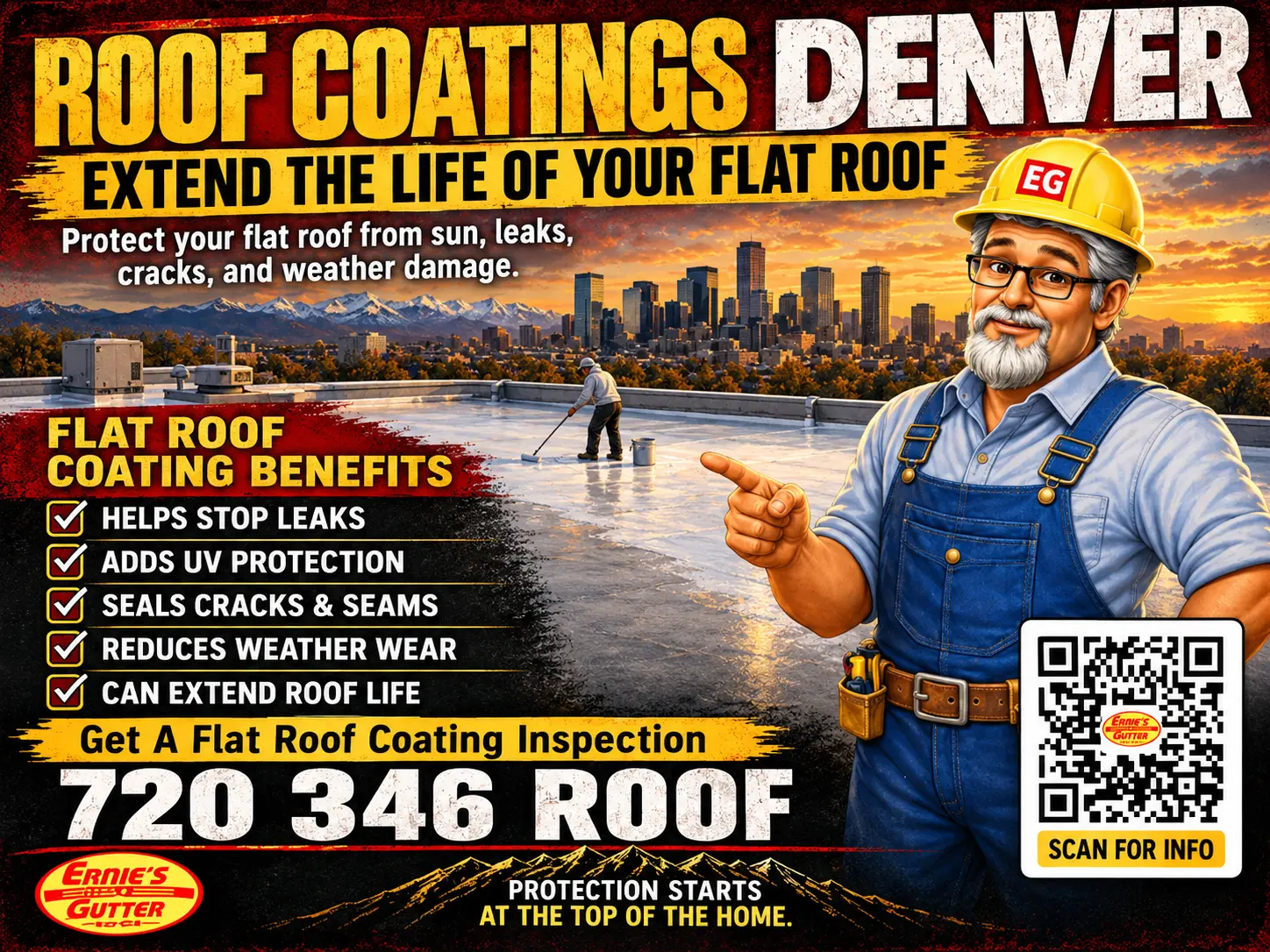
Roof Coatings Denver for Longer Flat Roof Life
Sometimes, a weathered roof can remain in service with the right repairs and restoration. It does not automatically need a complete tear-off. When the existing roofing is stable, reasonably drained, and suitable for restoration, a compatible coating can add surface protection and help preserve useful service life. The important question is whether the roof underneath is worth protecting.
If this is your first time hearing this, a roof coating is a liquid-applied roofing material that cures into a protective layer. It is more than ordinary exterior paint. The coating must bond to the existing roof, work with its material, and be installed at the manufacturer’s required thickness.
Denver roofs face strong sun, hail, snow, wind, and repeated temperature changes. Water collects near drains, scuppers, seams, roof edges, and old repairs when drainage or details are failing. A scupper is an opening through the roof’s perimeter wall that lets water drain out. These details deserve attention before any coating is applied.
This roof-coating guide connects you with Ernie’s Roofing, a third-generation family roofing contractor serving Denver since 1978. For a broader look at the service, visit Ernie’s Roofing roof coating services.
Roof Coatings Denver for Sun and Weather Protection
A compatible roof coating can help protect weathered roofing from ultraviolet exposure and surface deterioration. Reflective coatings can also reduce absorbed sunlight and roof surface temperatures under suitable conditions.
That does not mean every building will see the same energy savings. Insulation, roof construction, heating and cooling needs, coating properties, and maintenance all affect the result. In Denver, evaluate the whole building rather than buying a coating based on a promised percentage.
- Surface protection from sun and weather exposure
- Protection of repairable seams after proper detailing
- Restoration of suitable worn or chalking surfaces
- Potential extension of roof service life
- A maintenance option for compatible residential and commercial roofs
For independent background, read ENERGY STAR’s explanation of reflective cool roofs.
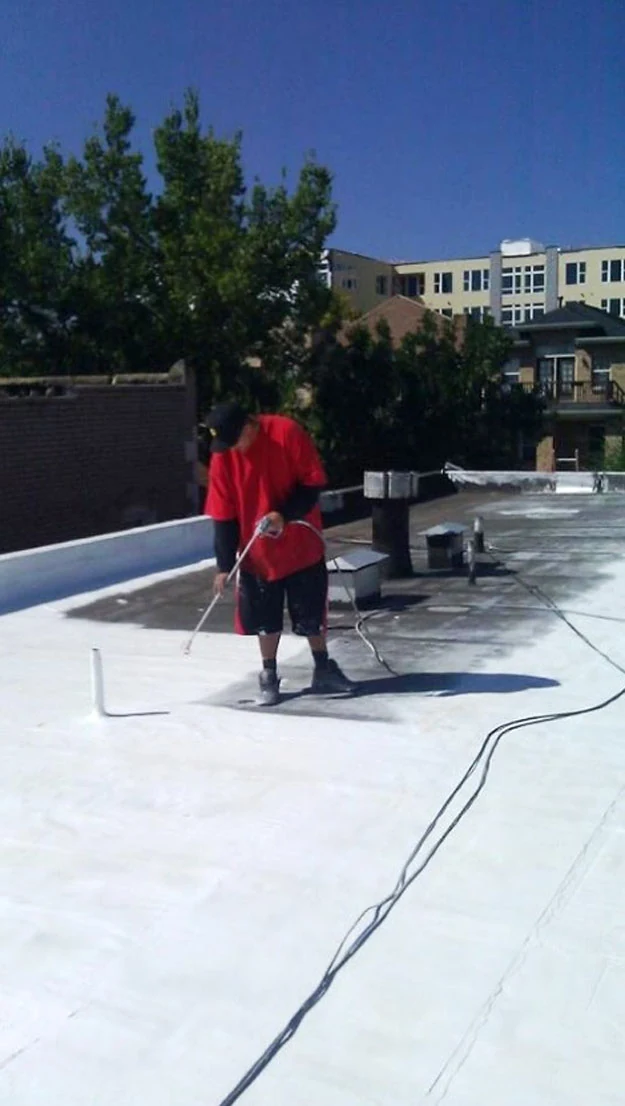
Roof Coatings Denver Starts With a Roof Inspection
An inspection should explain what is failing, what can be repaired, and whether coating offers practical value for your building.
Roof Coating, Roof Repair, or Roof Replacement?
These services solve different problems. Repairs address specific failures. Coating restores surface protection on a suitable roof after necessary repairs. Replacement addresses roofing that has reached the point where keeping it is no longer sensible.
A coating will not dry trapped insulation, strengthen deteriorated decking, reconnect loose roofing, or rebuild roof slope. Coating over those problems can hide the evidence while damage continues underneath.
For example, a stable garage roof with worn surfacing and a few repairable seams may be worth evaluating for restoration. A roof with widespread wet insulation, soft decking, and repeated leaks needs a different conversation. The appearance of the top surface alone cannot settle that decision.
Explore roof repair options or roof replacement services when the inspection points beyond coating.
Signs Your Denver Flat Roof Needs an Evaluation
Many calls begin with a ceiling stain. Others start when a property owner notices surface wear and wants to prevent the next leak. Both deserve an inspection rather than an automatic coating recommendation.
Cracking and Surface Wear
Checking, chalking, exposed material, or worn previous coatings may indicate loss of surface protection. Compatibility and adhesion still need evaluation.
Open Seams and Old Patches
Lifted seams, splits, loose edges, and failed repairs require attention before coating. Flashings around vents, walls, and equipment are common inspection points.
Standing Water and Leak Stains
Persistent ponding or interior staining can indicate drainage or concealed moisture problems. Coating alone should not be expected to resolve them.
From a safe location, note when a leak occurs, photograph interior staining, and gather previous repair records. Do not walk onto a wet, icy, soft, or unfamiliar flat roof to investigate. Share those observations when scheduling your inspection.
Our Denver Roof Coating Evaluation and Preparation Process
Roof coating performance starts with preparation. The proposed system must suit the roof material, existing coating, moisture conditions, drainage, and available weather window.
- Inspect the roof. Review surface condition, seams, drains, scuppers, flashings, penetrations, edges, and old repair areas.
- Investigate moisture concerns. Determine whether suspected wet areas require further testing or opening before restoration can be recommended.
- Choose the appropriate approach. Compare localized repairs, coating, and replacement based on the findings.
- Clean and prepare. Remove contaminants and loose or failed material according to the proposed system’s requirements.
- Repair and detail. Address approved seams, splits, penetrations, and vulnerable edges before the field coating.
- Confirm compatibility. Use adhesion testing, primer, or reinforcement where the selected manufacturer requires them.
- Apply and inspect. Follow specified coverage, thickness, curing conditions, and detail requirements; review the completed work and maintenance needs.

Ernie Said
“A coating can help extend roof life when the roof underneath is still worth protecting. The mistake is thinking you can coat over wet insulation, bad decking, failed seams, or major damage and make those problems disappear.”
Which Roofs and Coatings Should Be Considered?
Modified bitumen, metal, and certain single-ply roofs may be evaluated for coating. That is not blanket approval for every roof in those categories. Previous coatings, surface condition, manufacturer instructions, and preparation requirements determine whether a specific system is appropriate.
Acrylic Systems
Some acrylic coatings provide reflective surface protection on compatible roofs. Drainage, curing conditions, and the particular product’s limitations matter.
Silicone Systems
Some silicone systems are selected for UV and moisture resistance. Adhesion, repairs, surface preparation, and future recoating requirements must still be addressed.
Elastomeric Coatings
Elastomeric describes flexibility rather than one unique chemistry. Acrylic and silicone products can both be elastomeric; select the actual system rather than relying on the label alone.
Small commercial buildings, garages, additions, and low-slope residential roof areas may be candidates. Metal roofs also require inspection of fasteners, seams, rust, and detailing. Do not assume a product intended for one roof can be rolled onto another without verification.
What Affects the Cost of Roof Coatings in Denver?
A useful estimate starts with roof measurements and condition. Square footage matters, but preparation can make two similarly sized roofs very different projects. Compare the written scope rather than judging proposals only by the final number.
| Item | Why it matters |
|---|---|
| Roof material and existing coating | Determine compatibility, primer needs, and preparation. |
| Moisture and repair findings | Identify work needed before a coating can be considered. |
| Seams, edges, and penetrations | Require appropriate detailing, repairs, or reinforcement. |
| Specified coating system | Defines application thickness, coverage, curing, and maintenance. |
| Access and weather | Affect safe setup, scheduling, and installation conditions. |
Ask which product is proposed, what repairs are included, how thickness will be checked, and what exclusions apply. Request written warranty terms when offered. A manufacturer’s product warranty and a contractor’s workmanship warranty cover different responsibilities.
Why Local Roofing Experience Matters
Ernie’s Roofing evaluates coating as part of the complete roofing system: surface, flashings, drainage, previous repairs, and the building below. Denver’s changing weather makes scheduling and preparation important. A responsible recommendation may be coating, repair first, or replacement.
Storm Damage and Insurance Questions
If hail or wind damage prompted your inspection, document the condition before making assumptions about coverage. A coating proposal is not proof that an insurance policy covers the work. Visit Ernie’s Roofing insurance claim help for information about documentation and estimates. Your insurer determines coverage under your policy.
Get a Clear Answer Before You Spend Money on Coating
Tell Ernie’s Roofing your property location, roof type if known, approximate age, and whether you have active leaks or standing water. Photos and past repair records help explain what you are seeing.
Roofing services and inspection requests are handled by Ernie’s Roofing.
Roof Coatings Denver Questions and Answers
Can roof coating extend the life of my flat roof in Denver?
It can help extend service life when the existing roof is dry, stable, repairable, and compatible with the proposed coating. Preparation, coating thickness, drainage, weather exposure, and maintenance all affect performance. An inspection is needed before recommending restoration or estimating the roof’s remaining usefulness.
Does a reflective roof coating help with Colorado sun exposure?
A compatible reflective coating can reduce absorbed sunlight and help protect the roof surface from UV exposure. Actual roof temperatures and energy savings vary with the product, insulation, building design, climate, and maintenance. A fixed reduction in utility bills should not be assumed.
Will roof coating stop an existing flat roof leak?
A leak should be traced to its source and repaired before coating is applied. Open seams, damaged flashing, punctures, or wet roofing may need separate repairs or replacement. A coating system may form part of the completed restoration, but applying it over an unresolved leak can leave the underlying problem in place.
Can you coat a flat roof that has standing water?
Standing water calls for a drainage evaluation before product selection. Blocked drains, low areas, or roof movement may require correction. Some products have different ponding-water limitations, so the specific manufacturer’s requirements matter. Coating does not create roof slope or repair structural sagging.
Is roof coating less expensive than replacing my roof?
Coating a suitable roof can cost less than full replacement, but repairs, moisture removal, preparation, and detailing affect the total. If the roof is extensively wet or deteriorated, coating may offer poor value. Compare written scopes and expected maintenance rather than choosing on initial price alone.
How much does roof coating cost in Denver?
The price depends on roof size, material, access, existing coatings, repairs, drainage conditions, and the specified system. A roof inspection and measurements are needed for a meaningful proposal. Ask for preparation, primer, detailing, application requirements, exclusions, and any offered warranty terms in writing.
What is the best coating for a low-slope roof in Denver?
The best choice depends on the existing roofing, prior coatings, moisture conditions, drainage, and manufacturer approval. Acrylic and silicone systems have different application and maintenance requirements. Elastomeric describes flexibility and can apply to either chemistry. Select a compatible system after inspection rather than choosing by one label.
Can metal, modified bitumen, or single-ply roofing be coated?
Some roofs in these categories can be restored with compatible systems. Their condition, surface preparation, existing coating, adhesion, and manufacturer instructions must be checked first. Metal roof rust, loose fasteners, failed seams, and damaged sections need attention before a coating recommendation.
When should a Denver flat roof be replaced instead of coated?
Widespread moisture, deteriorated decking, extensive membrane failure, or drainage problems that cannot be reasonably corrected may favor replacement. A fresh surface layer cannot rebuild damaged roofing underneath. Ernie’s Roofing can evaluate the condition and explain whether repair, restoration, or replacement is the practical next step.
Who should I contact for a roof coating inspection in Denver?
Contact Ernie’s Roofing at 720 346 ROOF or use the inspection request link on this page. Provide the property location, known roof material, approximate age, and details about leaks or standing water. Ernie’s Roofing has served Denver since 1978 and evaluates roofs before recommending coating.
Related Reading
- Roof Coating Services
- Roof Repair
- Roof Replacement
- Emergency Roof Repair
- Re-Roof Services
- Residential Roofing
For an active leak or recent storm damage, contact Ernie’s Roofing to discuss the appropriate response before planning a coating project.
Protection starts at the top of the home.